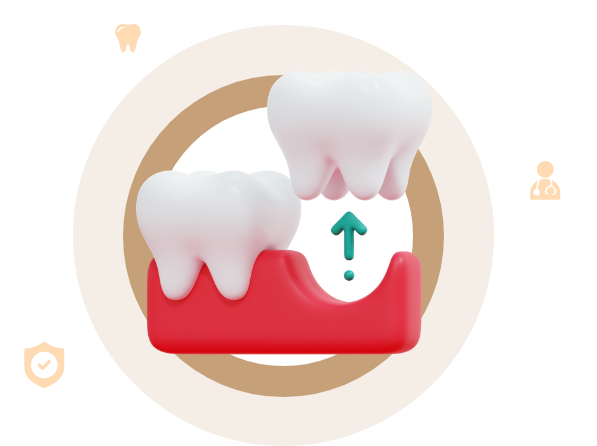
Consequences of Losing Teeth
- Created in Implant Dentistry
Losing teeth can cause discomfort and difficulty eating and speaking, but it also can negatively affect our jawbone.
Bone needs stimulation to maintain its form and density. When you lose teeth, your jawbone loses the stimulation it needs to stay strong and keep its form and begins to deteriorate.
Consequences of bone loss in the jaw include:
- A 25% decrease in jawbone width, in just the first year of tooth loss
- Change to face structure and aesthetics
- Increased change of bone fracture in face and jaw
- Movement of other teeth, creating bite misalignment
- Possible TMJ pain from change in bite
Tooth Replacement Options
- Dental implant
A dental implant is the most recommended tooth-replacement treatment because it restores the look, feel, and function of a real tooth, and because the implant fuses directly into the jawbone, it prevents bone loss. It also has over a 95% success rate—the highest of any tooth-replacement option.
Dental implants require a minor surgical procedure with local anesthesia. The implant is placed directly into the jawbone and capped with a lifelike dental crown, to give you the feel and function of your natural teeth.
- Partial or full dentures
Dentures are removable replacements for missing teeth and surrounding tissues. Partial dentures are used when only some teeth are missing, and put pressure on existing teeth and bones. This pressure can accelerate the bone loss process, and loosen any existing teeth.
- Bridgework